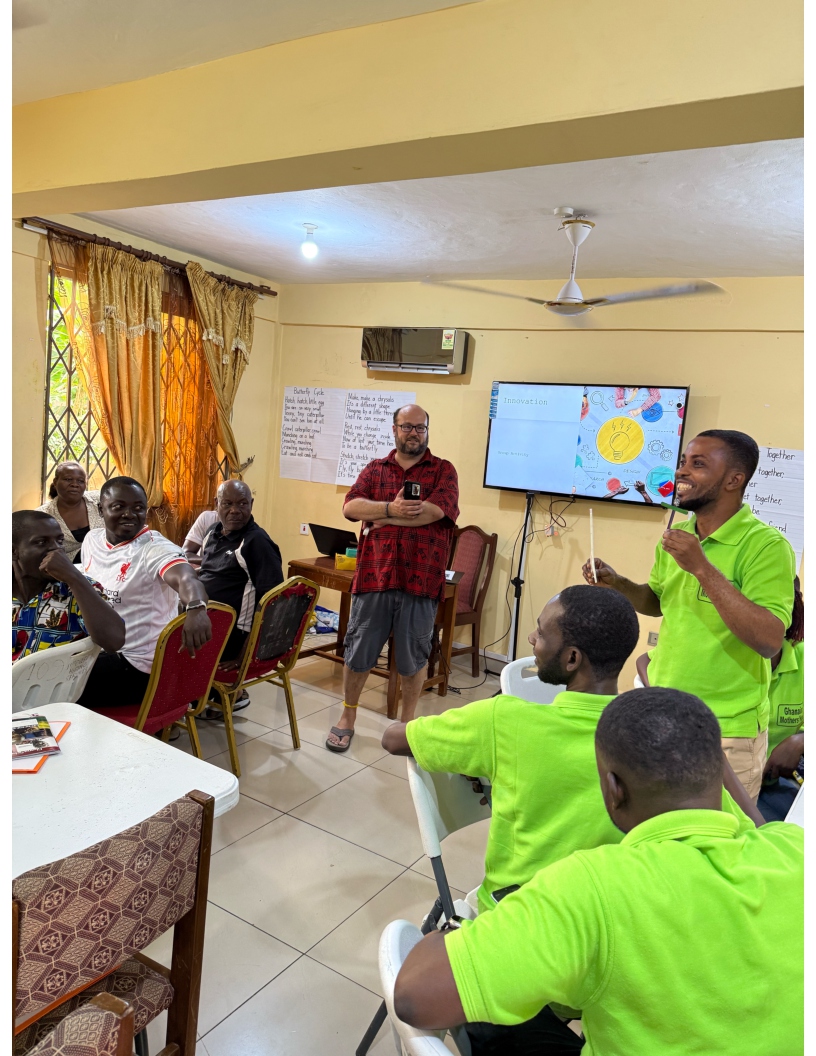
This was the closing charge I left with the teachers at the end of two days of teacher training. I have been coming to Ghana since 2008 and have been helping to lead the teacher training sessions for several years. This year’s training, which combined preparation and training for reading camp with strategies, tools, and perspectives that can be used in any classroom, was by far the best.
For two or three years, I led virtual teacher training via Zoom. This is the first time I have been able to be in person since 2021, and what a difference being in person makes (incarnate…think about this and what it means for our relationship with God). We started talking about innovation…what it means, why teachers are sometimes afraid of it, and what it could look like in the classroom.
The teachers, in sharing, gave some wonderful examples and ideas of what innovation can look like in a Ghanaian classroom: using student art work or student work to adorn the bare classroom walls when teacher have no posters—allowing students to act out a mini presentation, sharing what they have learned, instead of simply repeating what the teacher said. Creating peer review and reflection to check for understanding. I shared several ideas to use in class to get students thinking and wondering (See, Think, Wonder), and we did this activity. Several teachers discussed with me how to use it in their classrooms with their content/grade level.
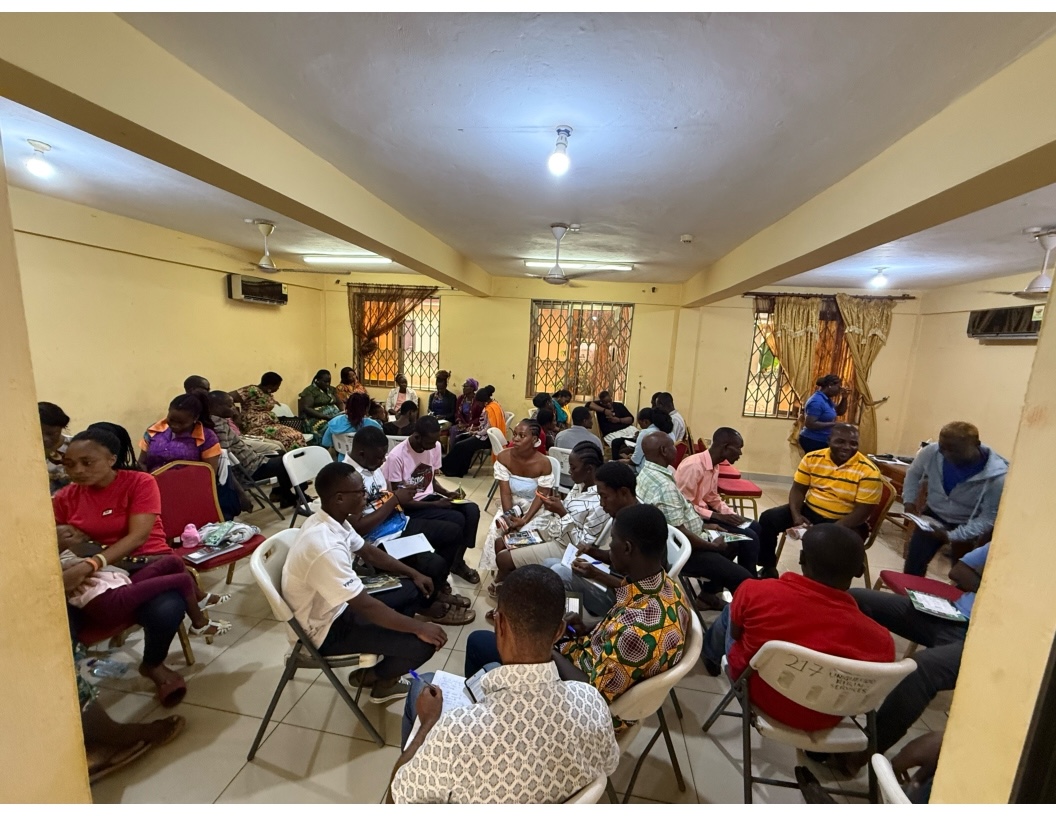
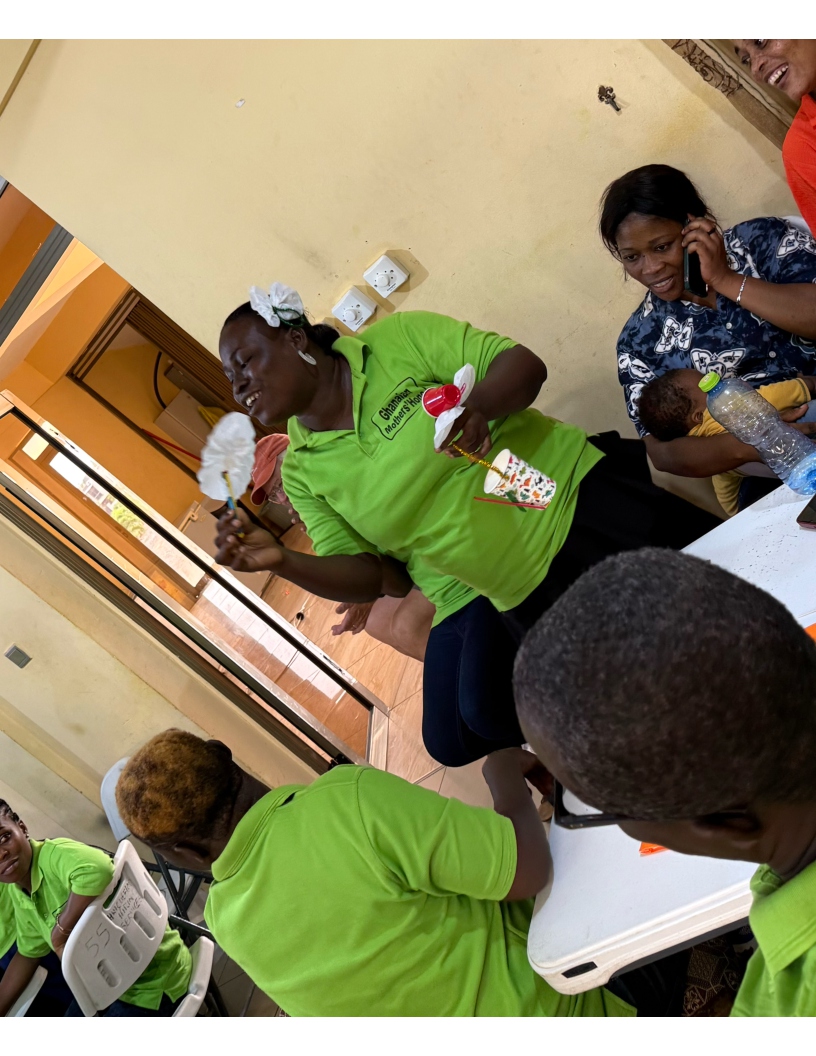
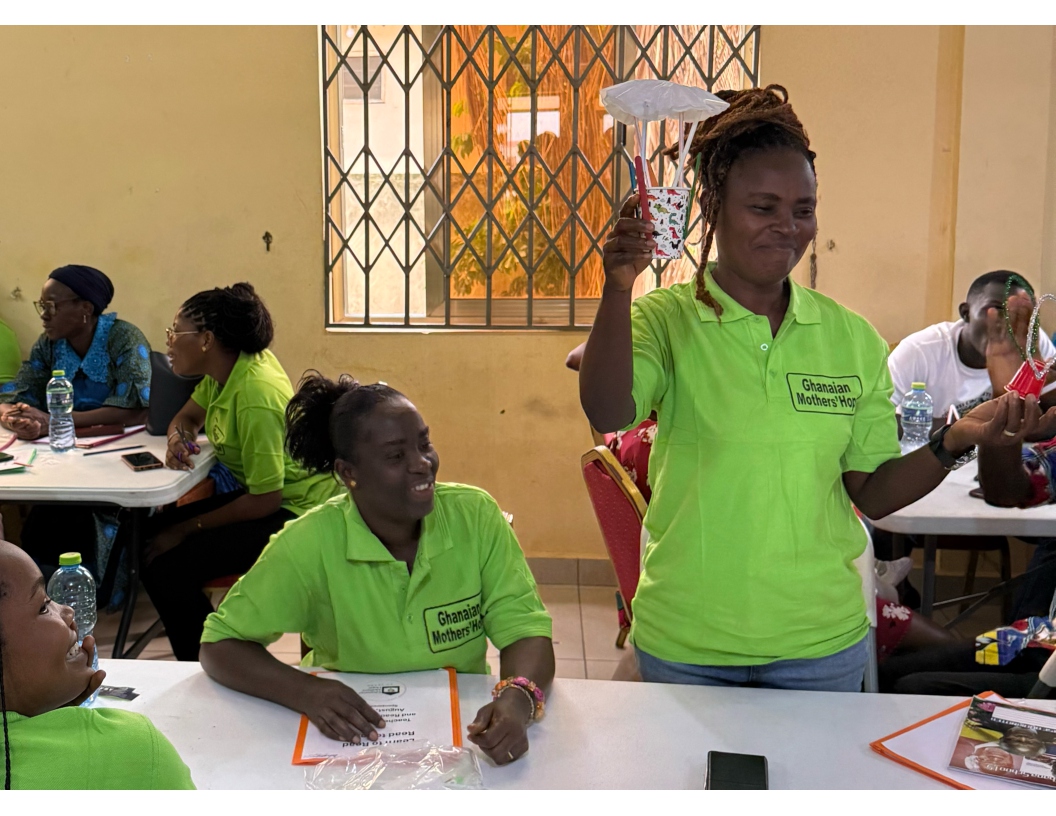
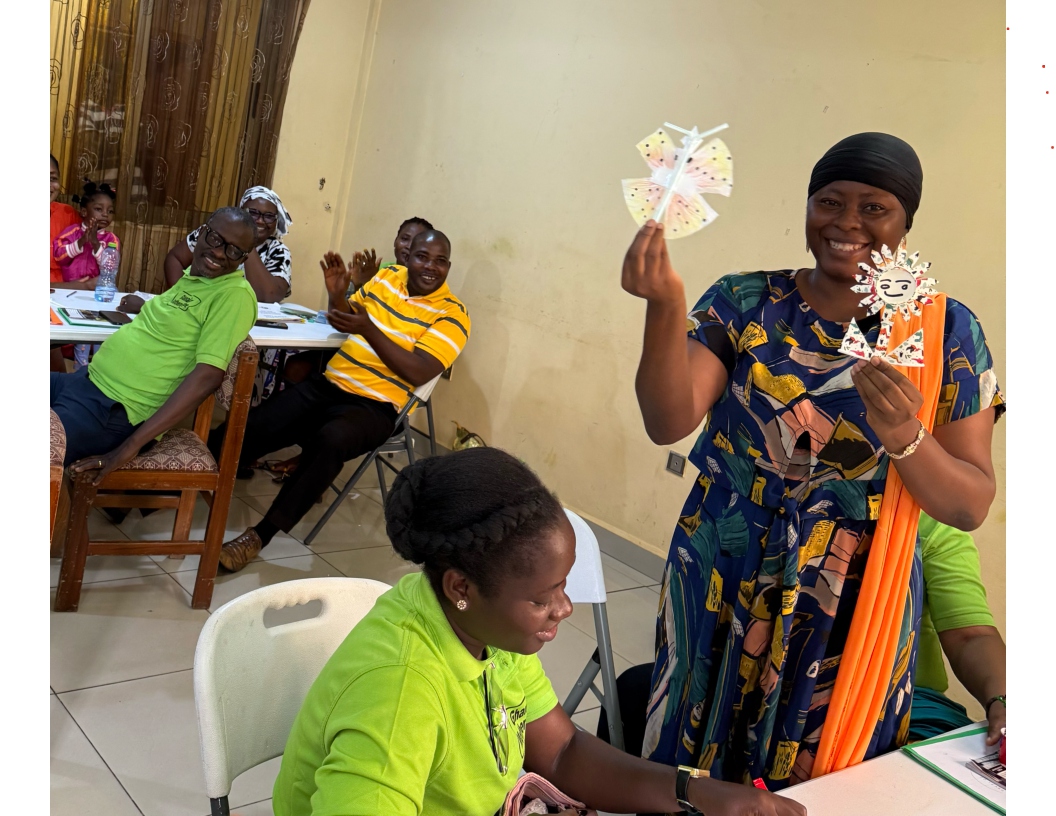
The Innovation Activity we did on day 2 was something new for the group. Each village/school group was given a bag with common items (paper clips, cups, toothpicks, coffee filters, etc.). They were given 15 minutes and tasked to create something. Five groups, fifteen different creations. No, my math is not that poor. They heard “create” but did not stop with one creation. They created multiple items with the resources. They experimented. They used their imaginations. They innovated and used their imaginations the way we all used to as young children. And we saw fifteen different masterpieces made with the same materials. The teachers were challenged to use this imaginative energy in their classes with students. They agreed they would.
One topic that the administrators brought up was the need for teachers to plan before teaching a lesson. We discussed the importance of planning and being prepared for teaching our students, how a lesson with no plan is like a voyage with no map and no destination in mind.
Most of us in education became teachers because we love children and love learning. Students are the most important people in a classroom, not the teacher. If students are the most important, they deserve the best we can give them, which means we prepare to give them the best learning experiences we can. Many things can be taken from us…. money, possessions, freedom, life even. But an education, what we learn, can never be stolen from us.
As teachers, we need to inspire our students through innovation, love, engagement, and commitment. The teachers here in Ghana are heroes. They come to teach, often in classrooms with no walls, no roofs, and no materials. Yet they teach. Sometimes they are not paid. Yet they teach. Sometimes their classes exceed 60 students. Yet they teach. They know who is in their classrooms. They know that learning to be a better teacher means a better Ghana. And they teach.
As teachers, we need to know, to teach, and to love like the future of the world sits before us each day. Because it does. And the future deserves every chance to be the best, and these teachers are shaping Ghana’s future leaders.
 Ghanaian Mothers' Hope
Leave a comment